 English
 Português
 Français


 English
Português
Français

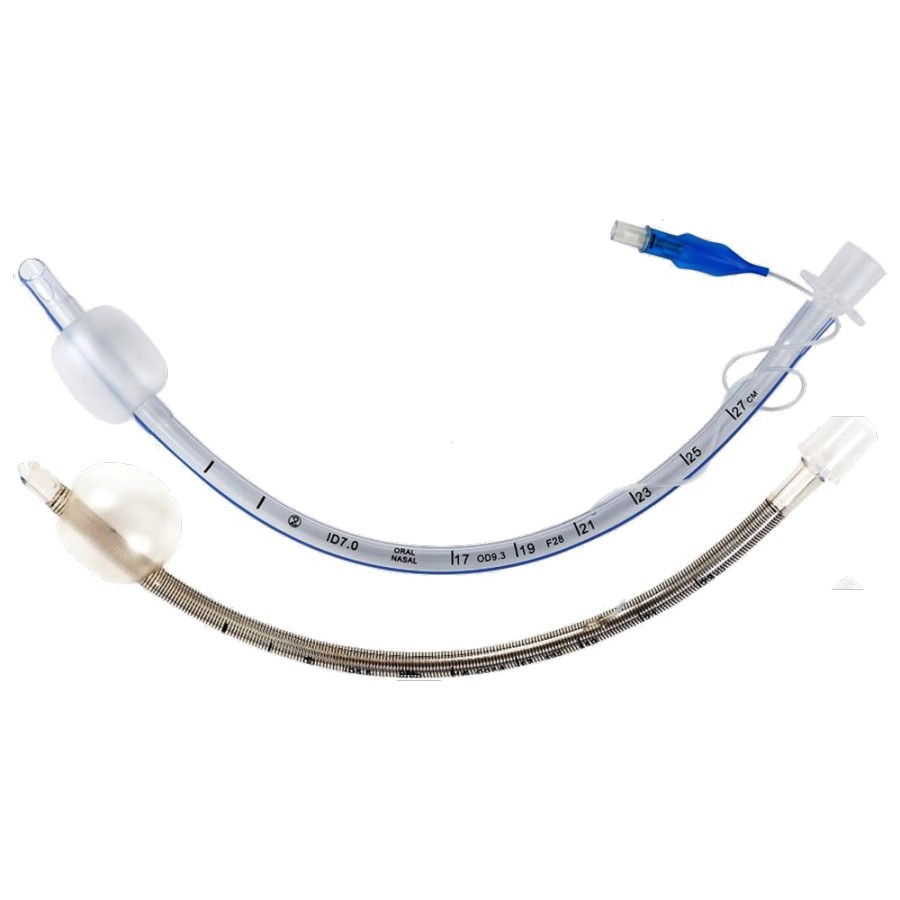
A sterile, single-use uncuffed endotracheal tube (ETT) made from medical-grade PVC, designed for oral or nasal intubation in neonates, infants, and young children. Features a radio-opaque X-ray detectable line embedded along the full length for precise positioning confirmation under X-ray. Available in internal diameter (I.D.) sizes 2.0 mm to 4.5 mm. The smooth rounded atraumatic tip and Murphy eye provide safe airway management. The uncuffed design allows a natural air seal at the cricoid level, reducing mucosal pressure and trauma in paediatric patients.


Endotracheal intubation for neonates, infants, and children requiring general anaesthesia, emergency airway management, or mechanical ventilatory support where uncuffed tubes are clinically appropriate.
Individually packed in sterile peelable blister pack (1 pc per pack)
10 pcs per Printed Box
10 Boxes per Export Shipper Carton
(0) I.D. 2.0 mm; O.D. 2.9 mm; Length: 145 mm; French Size: 8 Fr
(0) I.D. 2.5 mm; O.D. 3.5 mm; Length: 150 mm; French Size: 10 Fr
(0) I.D. 3.0 mm; O.D. 4.2 mm; Length: 165 mm; French Size: 12 Fr
(0) I.D. 3.5 mm; O.D. 4.9 mm; Length: 185 mm; French Size: 14 Fr
(0) I.D. 4.0 mm; O.D. 5.5 mm; Length: 210 mm; French Size: 16 Fr
(0) I.D. 4.5 mm; O.D. 6.2 mm; Length: 225 mm; French Size: 18 Fr
Uncuffed (Plain) — no inflatable cuff; relies on natural cricoid seal for airway protection, appropriate for paediatric patients up to approximately 8 years of age.
Radio-opaque line embedded along the full length of the tube enables precise confirmation of tube position under X-ray imaging, preventing accidental endobronchial intubation.
Medical-grade, latex-free, DEHP-free PVC (Polyvinyl Chloride); thermosensitive material softens at body temperature for patient comfort and atraumatic placement.
Murphy eye (lateral opening near the tip) provides an alternative ventilation path in case of tip obstruction; smooth bevelled atraumatic tip; calibrated depth markings along the tube for correct insertion depth guidance; standard 15 mm ISO connector for universal compatibility with ventilators and breathing circuits.
Sterile – sterilised by Ethylene Oxide (EO); non-pyrogenic; single use only.
5 years from date of manufacture
Store at room temperature (15–30°C); protect from direct sunlight, moisture, and heat; do not re-sterilise.
CE Marked; complies with ISO 5361 (Tracheal Tubes); BIS certified; single use medical device.
Full-length X-ray detectable radio-opaque line; Murphy eye for safety ventilation; calibrated cm depth markings; 15 mm universal ISO connector; latex-free and DEHP-free construction; smooth atraumatic bevelled tip.
For single use only; do not re-use or re-sterilise; confirm correct tube placement by X-ray, capnography, and clinical assessment before securing; use appropriate size based on patient age and weight using standard paediatric sizing formulae; do not use excessive force during intubation.
Used for endotracheal intubation in neonates, infants, and children up to approximately 8 years of age. The uncuffed design is preferred in younger children as the naturally narrow cricoid ring provides a functional seal, reducing mucosal pressure and the risk of subglottic stenosis.
Used to secure and maintain a patent airway during general anaesthesia for surgical procedures in paediatric patients, allowing controlled mechani cal ventilation and delivery of anaesthetic gases.
Used in emergency resuscitation situations — such as respiratory arrest, severe respiratory distress, or failed bag-mask ventilation — to establish a definitive airway in neonates and small children in NICU, PICU, and emergency settings.
Used for prolonged mechanical ventilation support in neonates and paediatric ICU patients with respiratory failure, prematurity, or critical illness requiring ventilatory support.
Just submit your details and we’ll be in touch shortly.
